
An Error of Judgment

History is marked by egregious errors of judgment, which have made their mark. Barbara Tuchman deals with a number of them in “The March of Folly” – from Troy to Vietnam, to which can be added Iraq and Iran.
The present war with Iran, which Donald Trump in an echo of Putin prefers to term “a military operation,” can trace its start to the JCPOA in 2015. This placed a restraint on Iran’s nuclear program in return for sanctions relief, but the U.S. withdrawal from the agreement in 2018 in Trump’s first term of office led to a renewal of Tehran’s program. Despite the 12-day war last June, Iran is still believed to possess 440 kg of uranium enriched to 60 pct, which can quickly be enriched to the 90 pct. needed for weapons grade.
In what has been characterized as “a war of whim” the United States has at Israel’s behest been dragged into a conflict which can prove interminable and like Trump’s “liberation day” destabilize the global economy. In the confrontation between the U.S. president and Ukrainian president Volodymr Zelenskyy at the White House in February last year, Zelenskyy was told, “You don’t have the cards right now,” which is the situation America is in.
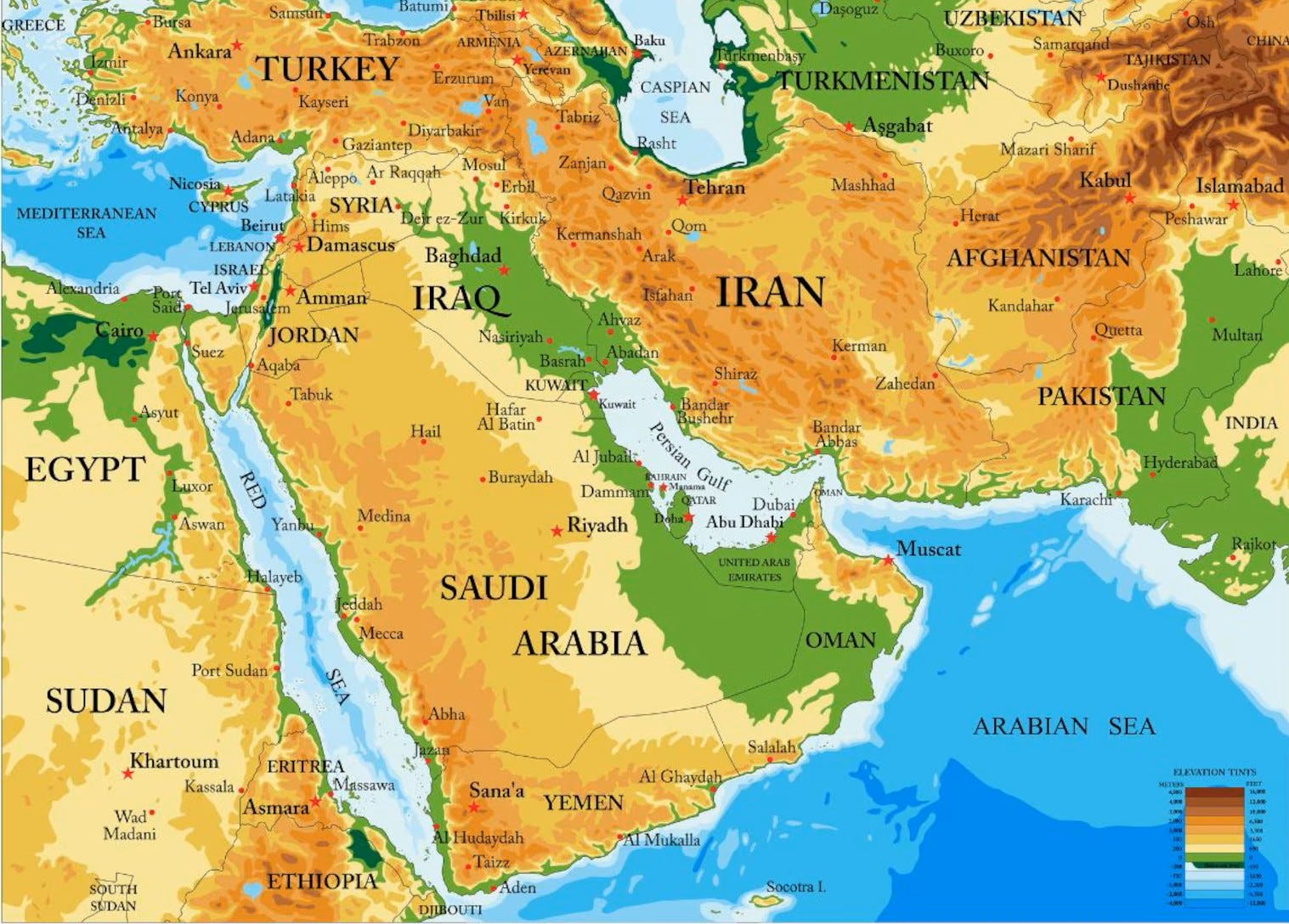
Iran’s stranglehold on the Strait of Hormuz together with its Yemeni proxy’s control of the Bab el-Mandeb has led to a surge in oil prices, where $150 a barrel could trigger a global recession.
There is some disagreement as to the content of Iran’s 10-point peace plan, which Trump has called “a workable basis on which to negotiate,” but a common factor is Iran’s control of the Hormuz strait. A version published by the Iranian embassy in India includes acceptance of enrichment, which is a moot point.
A major term for the two-week ceasefire with Iran, brokered by Pakistan, is free passage through the Hormuz strait, but now Iran demands a toll of $1 per barrel of oil to be paid in cryptocurrency for free passage of oil tankers. Another sticking point is the cessation of Israel’s attacks on Lebanon, which the United States says is not included.
Rather than act as a restraint to Israel’s Dahliya doctrine, the current war has led to what has been called a Netanyahu doctrine, that Israel must launch a pre-emptive war against any perceived threats, seize territory from neighbours to create buffer zones and deploy constant force as the only guarantor of security. In effect, the current conflicts will have no end in sight.
Egged on by Israel, the present war with Iran is based on a miscalculation. That by decapitating Iran’s leadership, Iran would fold. Foreign Policy’s interview with Ali Vaez, Iran project director at the International Crisis Group, undermines this argument. Vaez, a nuclear scientist, with his knowledge of Farsi was also involved in the negotiations that led to the JCPOA.
As Vaez explains, by killing Iran’s supreme leader Ali Khamenei and Ali Larijani, secretary of the National Security Council, two pragmatists, the prospect of a negotiated solution has radically diminished. They have been replaced by two hardliners, Mohammad Bagher Ghalibaf, the parlimentary speaker, and Mohammad Bagher Zolqhadr at the Security Council.
Vaez also explains that the Islamic republic is a network, a multi-power center, so that if you remove one individual, the rest of the system can fill the gap. The most powerful figure is now Ghalibaf, but there are other power centers that would check him. The new leaders are more aligned with the IRGC (Islamic Revolutionary Guard Corps) and unlike Khamenei are not risk averse.
Vaez concludes that Iran’s main objective is not to win but not to lose. Survival for them is victory, and the war is more going to plan for Iran than the case is for Washington.
Trump’s art of the deal has failed conspicously with Iran, but perhaps it could be, as columnist Janan Ganesh suggests, because not everyone has a price.
In the meantime, Trump is casting around for a scapegoat and his target of choice is the USA’s NATO allies, who have failed to provide support. “NATO wasn’t there when we needed them, and they won’t be there if we need them again.” He has aired the thought of U.S. withdrawal from NATO but forgets the collective support the U.S. received after 9/11 in accordance with Article 5.
Here Edward Salo points out that the United States’ greatest strategic mistake would be failing to build a coalition before fighting began, as it did before Operation Desert Storm in 1991.
A precursor to the UN Security Council’s resolution 2817 on March 11, condemning Iran’s “egregious attacks” against its regional neighbours, was the failure by the League of Nations in 1935 to deter Italy’s invasion of Ethiopia.
A parallel to this was the resolution put forward by Bahrain on April 7 with the support of GCC (Gulf Cooperation Council) member states and Jordan to ensure the reopening of the Strait of Hormuz. The original version would have invoked the UN Charter’s Chapter Seven, authorizing the council to approve actions including sanctions and the use of force. Instead, the watered-down version, which “strongly encourages” member states to take defensive action, was vetoed by China and Russia.
Trump had threatened “a whole civilization will die tonight,” and this measure could have provided a basis for a solution.
Vice-president JD Vance has left Islamabad empty-handed, and now the USA faces a standoff in the Hormuz strait. Undeterred, Donald Trump has posted an AI-generated image of himself as Jesus on Truth Social. Perhaps this is what Pope Leo means by a “delusion of omipotence.”
Robert Ellis is an international advisor at the Research Institute for European and American Studies in Athens